Resist: Do Not Comply
Nikki Craft, Lierre Keith, and Derrick Jensen collaborated on this music video about catastrophic climate change, arctic animals, and militant direct action.
An Illustrated Archival Biography and Research Page
This page brings together photographs, writings, documents, contemporary accounts, and other primary-source material from Nikki Craft’s life and more than five decades of feminist, political, environmental, animal-rights, and anti-pornography activism.
The page was originally created at the suggestion of Julian Real, in response to inaccurate and misleading information that was present in Craft’s Wikipedia biography from the beginning. What began as an effort to establish an independent documentary record gradually grew into a much broader illustrated account of her life, work, political actions, organizations, controversies, and historical context.
Much of the material presented here comes from Craft’s own extensive archive, assembled over decades. The purpose of this page is not to reproduce an encyclopedia entry, but to provide researchers, historians, journalists, activists, and other interested readers with a more complete documentary record and direct access to material from the periods being described.
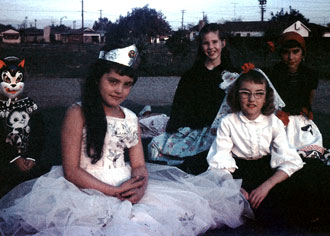
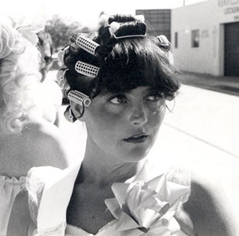
Nikki Craft has lived a notorious life of creative political activism including performances of street theater and acts of civil disobedience. In addition to taking on sexual abusers of children and the Naturist Movement for their alliance with child molesters and incest perpetrators, she has confronted corporate pornographers, “beauty industry” pimps, and social libertarians.
Craft has a long history of challenging oppressive conventional mores, summed up in one of her many group names: NO STATUS QUO. She became known for politically courageous demonstrations and dramatically outrageous street theater. She is also known as a radical feminist who has worked through the so-called Second and Third Waves, though she has said, “My politics are much broader than that.”
Since the mid-1970s, Craft has protested against the views of femininity promulgated in sexist, racist beauty pageants and has documented and resisted the racist misogyny of pornography. She was one of the first feminists to defy nudity laws by insisting that women who chose to do so should be able to go shirtless in public, rejecting the premise that the publicly exposed breast should be reserved for male consumerism and voyeurism. She has also been both a participant in the Naturist movement and an investigator of sex offenders within Naturist and nudist environments.
In the 1970s, Craft recognized that feminists needed to employ civil disobedience, while using the media, as a strategic tactic. For more than a quarter century, she encouraged women “to break any law that discriminated against them.” When she appeared before judges in multiple arrests she consistently refused to accept any form of “rehabilitation,” during her arrest, sentencing, or time spent in prison. She welcomed feminist scholars and lawyers to take up street demonstrations alongside her.
Over the decades she has been arrested 50 times for acts of civil disobedience. By 1990, after what she called the “stupidification” of an increasingly conglomerated media, she concluded that using it to communicate the real harm of social injustice was a waste of time. By then, the Internet offered an unregulated environment in which she could maintain appropriate control over the content of her own published work.
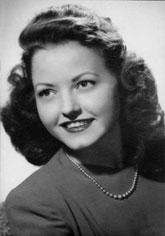
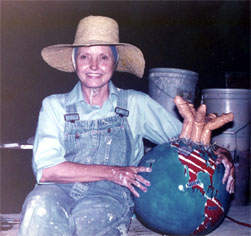
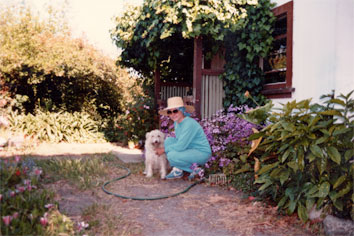
She was raised by a feminist mother who subscribed to Redstockings and other early feminist publications, keeping them on the family coffee table when Craft was in high school. Her mother protested against discriminatory advertising in her local newspaper. Craft has attributed much of her political perspective and creative approach to her mother. Regarding sexuality, her mother answered questions directly and honestly; curiosities were welcomed without repression and physical pleasure was never associated with shame.
In the mid-1950s, in Palo Alto, California, at about the age of seven, Craft learned how to play chess. At around that same time she decided not to have children, and she also decided not to marry.
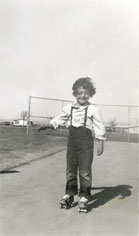


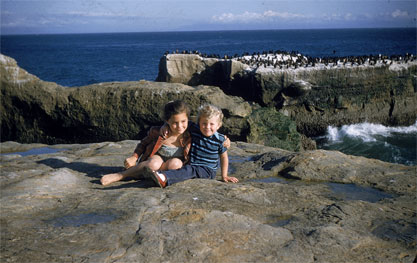
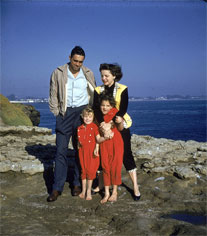
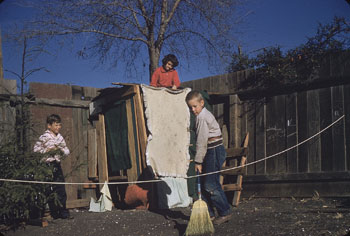
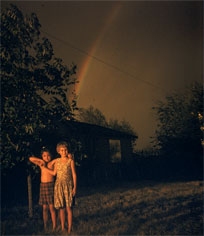
When Craft was in the 10th grade in 1965, she refused to stand to recite the pledge of allegiance and would not attend football pep assemblies. She later understood this rebellion as resistance to a type of mob mentality, sometimes expressed as U.S. nationalism.
That same year she was beaten by her father for wanting to learn about evolution rather than attend a Christian church. After that assault, Craft began running away, and during one of those escapes from home she was raped at knife point. The night after the rape she was held in solitary confinement in a juvenile facility. The District Attorney later declined to prosecute the case. Craft wrote about these events in “I Was a Teenage Incorrigible.”
On Labor Day Weekend in 1969, two weeks after Woodstock, at age 19, Craft attended the Texas International Pop Festival and skinny-dipped for the first time in Lewisville, Texas. In the late 1960s she also attended her first demonstrations supporting legalized abortion in Austin. At her first anti-rape conference, which she attended at her mother’s urging, she began to understand the political meaning and social ramifications of sexual assault against women.
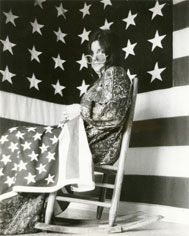
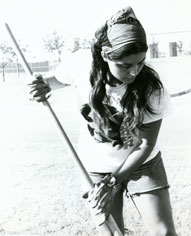

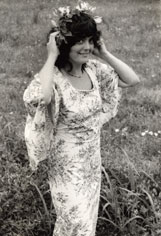

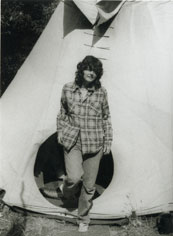
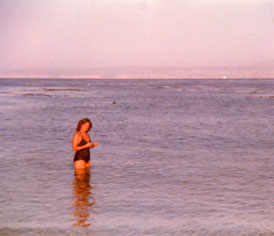
In the mid-1970s Craft became concerned with health, read about nutrition, rode bicycles for thousands of miles, practiced Kundalini yoga, and for approximately 15 years swam a mile most days of the week. For several years she swam to the end of the Santa Cruz pier and back in 55–60 degree water, and she often swam against the current in the Sacramento River while living in Rancho Cordova.
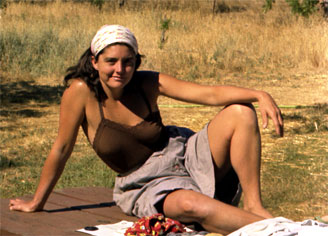
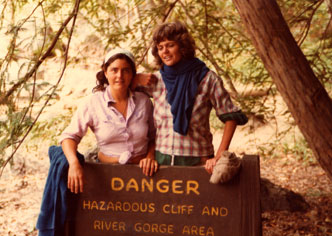
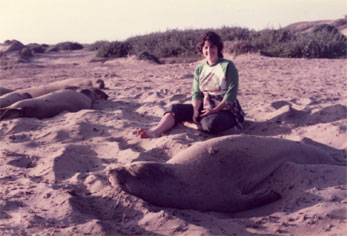
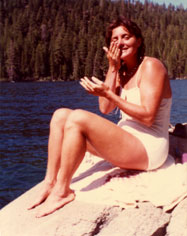
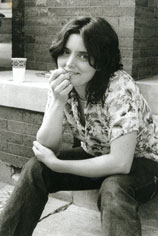
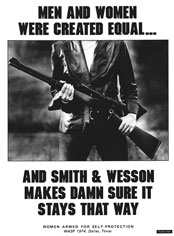
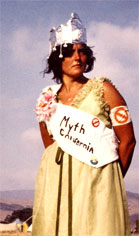
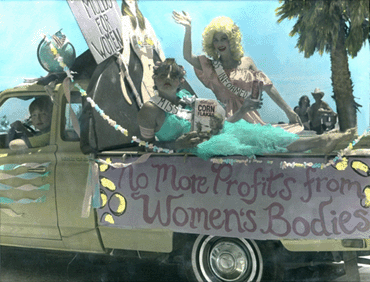
The reigning Myth California, 1981–1983, had responsibilities that included confronting various cultural myths. In 1979, Craft helped organize the first Myth California Anti-Pageant in Santa Cruz. In 1980 Craft joined with Ann Simonton and others, and over the next nine years took part in protests that included throwing raw meat onto the stage and pouring “the blood of raped women” across an entryway. The protests continued after the Miss California pageant moved from Santa Cruz to San Diego.
In the early 1980s Craft became a ceramist at UCSC. One year she made 500 hand-thrown pieces and signed them all “Stop Violence Against Women.”
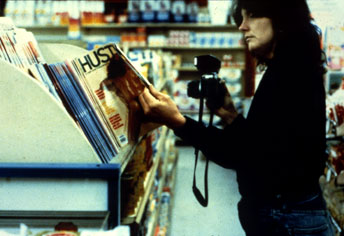
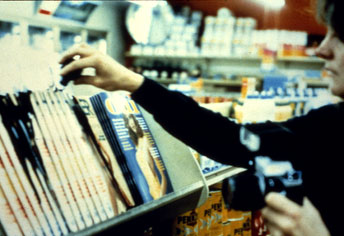
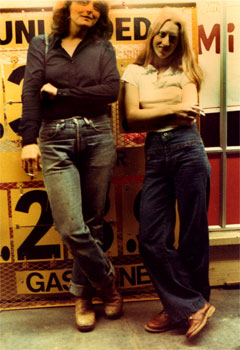
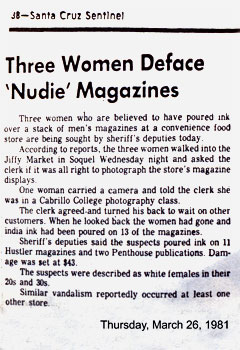
In 1980 she created the Preying Mantis Women’s Brigade. In retaliation for publishing especially violent pornography, and as an experiment in what citizens in a community could do, Preying Mantis took “The Porn Machine” to a press conference at Hustler headquarters in Los Angeles. The group then organized actions to remove Hustler from local stores. In the first 12 months, 28 stores in the Santa Cruz area stopped selling the magazine.
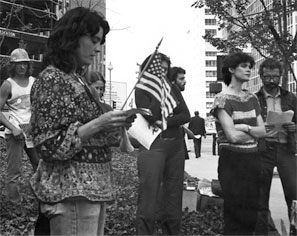

On March 31, 1980, Craft entered the UCSC Special Collections library and destroyed The Incredible Case of the Stack O’ Wheats Murder print reproductions by pouring chocolate syrup on their torn pieces. At that time she released an explanatory statement, “In Defense of Disobedience.” Months later she donated another set of prints identical to the one she destroyed. The action received widespread press coverage and was later documented in Diana Russell’s work on femicide.
In 1981, Craft formed the Cross Your Heart Support Network and organized numerous shirt-free rights demonstrations after she was arrested on a Santa Cruz beach for refusing to put her shirt on. In August 1984, while sunbathing at the Cape Cod National Seashore, she was again arrested for refusing to put on her shirt.
In 1981, Craft was arrested with Ann Simonton and others for pouring their own blood — “the blood of raped women” — across the entryway of the San Jose Miss Nude Pageant. In 1981 and again in 1988 she was arrested during her duties as Myth California at Diablo Canyon Power Plant while protesting nuclear power.
In 1983 Craft founded Citizens for Media Responsibility. During the next year and a half, Craft and Dr. Melissa Farley organized the National Rampage Against Penthouse, which resulted in hundreds of arrests across the country.

In March 1986, Craft and eight other women were arrested in Chicago after chaining themselves in front of the Playboy Foundation demanding that Hugh Hefner “get naked” and pose in his own publication. In June 1986 she was arrested in Rochester, New York as part of the Rochester Topfree Seven. In 1992, after six years, the women were acquitted.
In 1988 Craft officially disaffiliated from the naturist movement. She and other feminist plaintiffs also withdrew from the Cape Cod litigation because of concerns about the emphasis on First Amendment rights for nudists and naturists and the diminished attention given to gender equality.
One of Craft’s major projects involves researching and publishing reports of alleged pedophilia and child molestation within nudist and naturist settings and leadership. The first reports were published in The Iconoclast, and they now appear on The Nudist Naturist Hall of Shame.
Craft has argued that major naturist organizations failed to do enough to investigate and remove offenders, report them to law enforcement, or establish adequate procedures for dealing with abuse. The historical material on this subject is being assembled separately in the Hall of Shame and the Nikki Craft Archival Project on the Internet Archive.
In December 1991 Craft formed Always Causing Legal Unrest (ACLU). The project criticized the American Civil Liberties Union and other institutions when Craft believed they failed to confront violence against women and children.

In the early 1990s, for approximately four years, Craft published an irregular newsletter called The Iconoclast, which reported on connections between the nudist/naturist community, child pornography, and pedophiles. By this time, she had abandoned both nudism as a movement and the political struggle for shirt-free rights for women, maintaining a focus on men’s institutionalized dominance, including sexual violence against children and women.
In May 1990, Craft spent 23 days in jail for tearing up four copies of Esquire magazine in a Bellingham, Washington mall bookstore to protest its cover story, “Your Wife: An Owner’s Manual.”
In 1992, Craft and others confronted Changing Men and other profeminists over their alignment with pedophile interests. In 1992, Diana E. H. Russell dedicated Femicide to Craft; Russell’s Making Violence Sexy also described aspects of Craft’s work. In 1997 Andrea Dworkin dedicated her book Life and Death to Craft.
In 1995, On The Issues published Craft’s article “Busting Mister Short Eyes.” In 1996 she opened the Andrea Dworkin Online Library; in 2005 the Andrea Dworkin Memorial Website; and in 2006 the Andrea Dworkin Audio and Video Archive.
In 2000, Craft and D. A. Clarke organized Feminists for Ralph Nader. In 2001 Craft published “A Call on Feminists to Protest the War Against Afghanistan.” In 2005 she organized Hustling the Left, criticizing progressive leaders who publicly cooperated with Larry Flynt and Hustler.
Nikki Craft, Lierre Keith, and Derrick Jensen collaborated on this music video about catastrophic climate change, arctic animals, and militant direct action.
A hypnotic tribute and creative visual indictment of the pharmaceutical industry, centered on central nervous system depressants and addiction.
“No nation on earth has ever gone to war for women’s rights. We are not likely to be the first.”
“Money talks, but it silences, too.”
“But I wanna be part of the problem.”
“The media is the new church; the television its altar; the image its sacrament; the First Amendment its bible; and any critique its blasphemy. Libertarians are the new evangelists.”
“I’ll burn that bridge when I get to it.”
“The right to be left alone? Larry Flynt hasn’t ever left any one alone at any time in his life!”
“I sweat the small stuff because it’s all big stuff.”
“Opinionated is not a bad word in my opinion.”


Long-running collection of activist projects, writings, graphics, and historical documentation.
Research and documentation concerning child safety, exploitation, and accountability in nudist and naturist settings.
Documentation and criticism of political alliances involving Larry Flynt and Hustler.
Early web archive devoted to Andrea Dworkin’s work.
Activist documentation and criticism of civil-liberties institutions and pornography politics.
Direct-action organizing, anti-pornography campaigns, street theater, and archival materials.
NikkiCraft.com action archive, including environmental and political projects.
Additional source material maintained on NikkiCraft.com.